The short answer on quote vs invoice: a quote is the price you offer before the job, and an invoice is the bill you send once the work is done or a payment stage is due. Same customer, often the same line items, but a different job to do. The quote asks the customer to say yes. The invoice asks them to pay. Mix the two up and you can end up held to a price you never meant to fix, or chasing money with a document that was never a proper bill.
Quote vs invoice at a glance
The difference between a quote and an invoice comes down to timing and purpose:
| Quote | Invoice |
|---|---|---|
When you send it | Before the work starts | After the work, or at an agreed stage |
What it asks for | A yes to the price and the scope | Payment |
The date that matters | How long the price is valid | When payment is due |
Binding? | Once the customer accepts it | It bills for work already agreed |
Rules on what it must show | Good practice, no fixed list | Set out by GOV.UK |
Counts as a sale in your books | No | Yes |
That last row is the one people forget. Your accountant can't book a quote as income, and a customer can't really pay one either. It's an offer, nothing more, until somebody says yes.
Is a quote an invoice?
No. A quote is an offer to do a defined job for a defined price. An invoice is a demand for money that is owed under a deal you've already made.
The bit that matters is what happens when the customer accepts. Citizens Advice, in its guidance for England, tells homeowners that once they say yes to a quote, "it's a binding agreement" between them and the trader, whether it is written down or not (Citizens Advice). So the quote is where the price gets locked in. The invoice is where you collect it.
Quote vs estimate: the one that costs money
Quotation vs invoice is the obvious mix-up. Quote vs estimate is the one that bites.
In UK consumer terms a quote is a fixed price and an estimate is a rough guess. Citizens Advice tells customers to "get a quote, not an estimate", and says a trader can't charge more than the quoted price unless one of these happens (Citizens Advice):
- the customer asks for extra work that wasn't in the quote
- the trader tells them extra work is needed and they agree to pay for it
- the trader made a genuine mistake writing down or working out the price
So if you honestly can't price a job until the floorboards are up, call it an estimate, say so at the top, and say what could move the number. Write "quote" and you should expect to be held to it.
What to put on a quote
There's no legal checklist for a quote the way there is for an invoice. But Citizens Advice gives customers a list of what a quote should include, and that's what the person reading yours has been told to look for:
- A fixed total price, not a day rate.
- A breakdown of the work and the materials needed.
- Separate costs for each material and each part of the job.
- How long the price is valid for.
- Whether the price includes VAT.
- When the price can go up, for example only if the customer agrees to extra work.
Add your own basics on top: a quote number, the date, the customer's name and address, your contact details, and the payment terms you'll use if they accept, such as a deposit or stage payments.
What has to go on an invoice
Invoices do have rules. GOV.UK says an invoice must include (GOV.UK):
- a unique identification number
- your company name, address and contact information
- the company name and address of the customer you're invoicing
- a clear description of what you're charging for
- the date the goods or service were provided
- the date of the invoice
- the amounts being charged
- the VAT amount, if applicable
- the total amount owed
Sole traders must also show their own name and any business name, plus an address where legal documents can be delivered if they trade under a business name. A limited company has to show its full name as it appears on the certificate of incorporation.
If you and your customer are both VAT registered, GOV.UK says you must use a VAT invoice, which carries more detail than a plain one. Our guide to VAT invoicing for tradespeople goes through what that adds.
Chargd puts the VAT on the invoice and gives you clean figures, but it does not file Making Tax Digital returns, does not submit anything to HMRC and does not calculate CIS deductions. That stays with your accountant or your MTD software.
Where it goes wrong in practice
Most of the trouble with quotes and invoices isn't legal. It's admin. The usual suspects:
- The quote gets paid as if it were a bill. The customer transfers a deposit against the quote, there's no invoice number behind it, and your records have a hole in them at year end.
- The invoice is retyped from the quote. Somebody drops a line, or copies last month's price for a part.
- The job changed and the paperwork didn't. The invoice is higher than the quote, the customer remembers the quote, and there's nothing in writing about the extra work they agreed to.
The fix is dull but it works. The invoice should be the accepted quote, plus any extras the customer agreed to, written down.
How to convert a quote to an invoice
Here is the loop, start to finish:
- Send the quote with an expiry date on it.
- Get the customer's yes in writing. A reply to your email or a text is fine.
- Do the work, and note any extras the customer agrees to as you go.
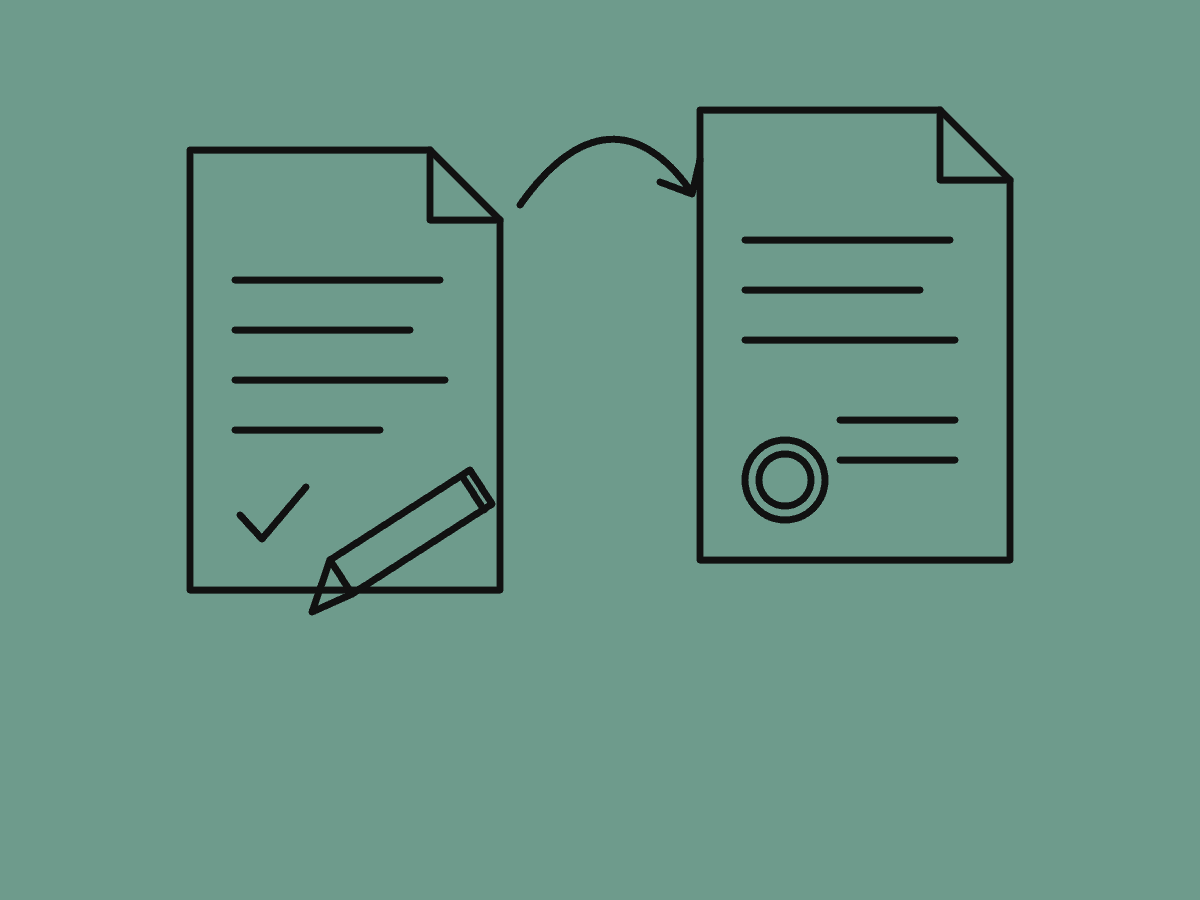
- Turn the accepted quote into an invoice instead of starting a blank one, then add the agreed extras.
- Set the due date, check it against the GOV.UK list above, and send it.
In Chargd, step 4 is one button. Convert to invoice on an accepted quote copies the client, line items, prices and tax rate into a new draft invoice linked back to the quote. You can't convert a quote that hasn't been marked accepted, which keeps unconfirmed work out of your invoice list. We walk through it in quote to invoice in one tap, and the quotes docs cover the rest.
Do you need a separate quote and invoice app?
No. If your quotes live in one place and your invoices in another, you'll be retyping between them forever. One quote and invoice app that does both is the whole point.
The other thing to think about is where you write your quotes. A lot of tradespeople price jobs on site, in a loft or a basement with no signal. A desktop app works there. Chargd runs on Mac and Windows, works fully offline, needs no account, and keeps your records on your own machine. You build the quote, export the PDF, and send it when you're back in range.
Be fair to the other side, though. If you want customers to tap a link to accept a quote or pay by card online, a cloud tool is built around that, and it may suit you better.
On cost, the free tier of Chargd has no time limit and covers up to 5 clients, with quotes, invoices, quote-to-invoice conversion and PDF export. Pro is $49 paid once, with unlimited clients and your own branding. Details are on the pricing page, and you can download it here.
Key takeaways
- A quote is an offer before the work. An invoice is the bill after it, or at an agreed stage.
- Once a customer accepts a quote, Citizens Advice says it's a binding agreement, written down or not.
- Call it an estimate if the price could move. Call it a quote only if you'll stand by it.
- GOV.UK sets out what every invoice must show. Quotes have no fixed list, but customers are told what to look for.
- Convert the accepted quote into the invoice instead of retyping it, and write down any extras the customer agrees to.